
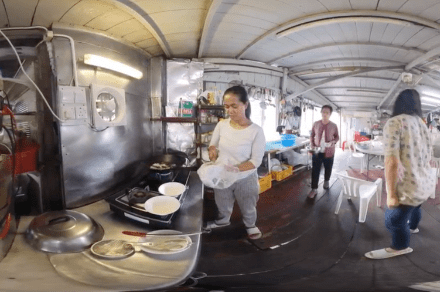
In the APSS5795 – Integrating Health and Social Care course, students were provided with an innovative opportunity to apply theoretical concepts through the use of 360° cameras. Each group was tasked with interviewing and documenting the life of an individual suffering from a health problem, such as eczema, while employing the socio-ecological approach to map the psychosocial journey of the individual.
Course Overview
The course aims to provide students with conceptual and practical tools to understand the integration of health and social care, with a particular focus on the challenges posed by the COVID-19 pandemic. The syllabus covers the health and social care system of Hong Kong, and students are encouraged to apply the co-production and capability approach to social work practices.
Link to syllabus: http://tiny.cc/APSS5795syllabus
360° Video Project: Documenting Health Journeys
As part of the course, students were given 360° video cameras to create immersive interviews and documentaries. These videos chronicled the daily challenges faced by individuals suffering from various health problems, such as eczema. Through this project, students were able to:
- Engage with real-world cases: By interviewing individuals living with health conditions, students gained deeper insights into the physical, psychological, and social aspects of the disease.
- Apply the socio-ecological approach: Students used this approach to map the psychosocial journey of the individuals they interviewed. This helped them analyze how the individual’s health condition was influenced by various factors, such as family dynamics, community support, healthcare systems, and broader societal influences.
Reflection and Learning
This hands-on project allowed students to bridge the gap between theory and practice. The 360° videos provided a unique, immersive way to engage with the subject matter, helping students to better understand the multidimensional nature of health problems and the importance of integrating health and social care when addressing these issues.
By employing the socio-ecological approach, students were able to critically analyze the patient’s journey and recommend ways in which social workers can improve the well-being of individuals through more integrated care strategies.
 PolyU APSS CSD